
Commercial Vehicle Accidents: Hidden Insurance Policies That Can Significantly Increase Recovery
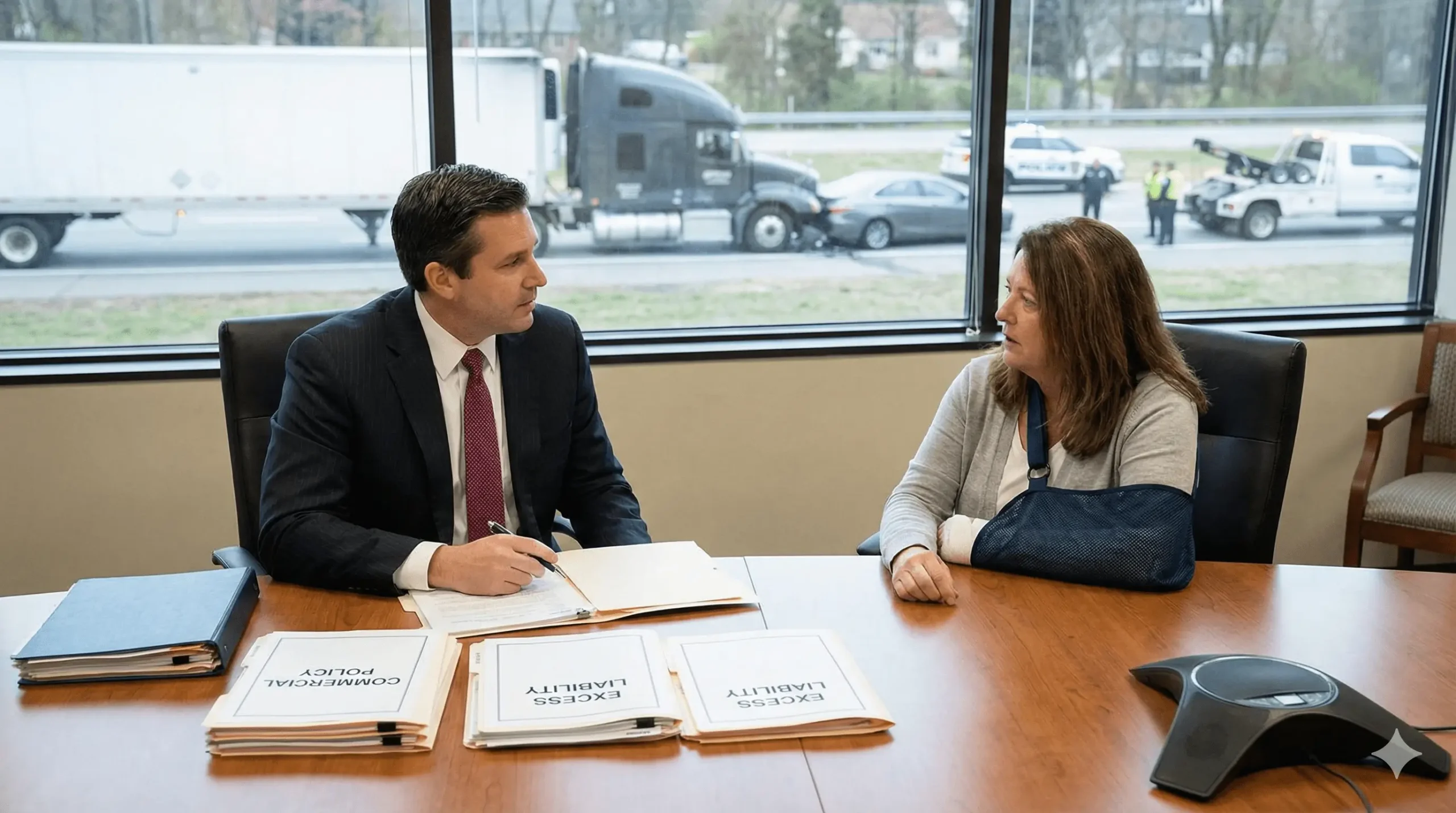
Commercial vehicle accidents are rarely backed by a single insurance policy. A tractor, trailer, cargo load, and dispatch chain often involve multiple companies each carrying separate insurance coverage that may apply to the same crash.
Identifying these hidden layers of insurance is frequently the difference between a quick policy-limit offer and full financial recovery when medical care, lost income, and long-term injuries exceed the trucking company’s primary coverage.
Why Commercial Vehicle Accidents Are Structurally Different From Car Accidents
Commercial crashes arise from business operations, not isolated driving decisions. Liability is often spread across multiple entities involved in authorizing, loading, dispatching, or maintaining the vehicle.
Because of this structure, commercial accident claims are evaluated very differently from standard personal injury cases, where coverage is typically limited to one driver and one policy.
Personal injury claims involving commercial vehicles require a broader investigation into operational responsibility.
Common Liability Layers in Commercial Crashes
A single commercial accident may trigger insurance coverage carried by several parties, including:
- The driver, sometimes operating under limited or specialized coverage
- The motor carrier listed under the DOT number and required to carry primary liability insurance
- The freight broker responsible for selecting the carrier
- The shipper that controlled cargo preparation or loading
- The trailer owner, which may be a separate insured entity
Missing any one of these layers often results in an undervalued claim.
The MCS-90 Endorsement and Why Coverage Denials Are Not the End
The MCS-90 endorsement is a federally mandated provision attached to many interstate trucking policies. Its purpose is to protect the public when insurers attempt to deny coverage based on technical exclusions.
When applicable, the endorsement requires the insurer to satisfy a judgment even if the underlying policy would otherwise deny coverage preventing injured parties from being left without compensation due to internal policy disputes.
How the MCS-90 Forces Payment Despite Policy Defenses
Insurers often argue that coverage does not apply because the truck was not listed on the policy, the driver violated company rules, or the activity fell outside policy terms. The MCS-90 endorsement overrides these defenses by prioritizing public safety obligations over internal underwriting disputes.
Broker Liability and the Insurance Policies Most People Never See
Freight brokers control which carriers are hired to transport cargo, and that selection carries legal responsibility. Courts increasingly recognize that brokers cannot ignore safety histories without exposure.
When a broker hires a carrier with known violations, poor compliance records, or a pattern of unsafe operations, injured parties may pursue claims based on negligent selection.
Why Broker Insurance Can Expand Total Recovery
Brokers often maintain general liability or contingent auto liability policies that exist independently of the trucking company’s coverage. These policies frequently become critical when damages exceed carrier limits and align closely with principles found in
consumer protection law.
Shipper Liability When Cargo Loading Causes the Crash
Not all commercial crashes result from driver behavior. Improperly loaded, unbalanced, or unsecured cargo can destabilize a truck and trigger rollovers, jackknife incidents, or roadway spills.
When a shipper controls or seals the load, liability may shift away from the driver and toward the company responsible for how the cargo was prepared.
Accessing Shipper Insurance Coverage
Large shippers often carry substantial corporate insurance policies. Establishing negligent loading can unlock these policies, significantly increasing recovery beyond standard trucking limits.
Trailer Interchange Insurance and Equipment-Based Fault
In many commercial accidents, the tractor and trailer are owned by different companies. Trailer interchange agreements frequently require separate insurance coverage for defects or failures tied to the trailer.
If lighting malfunctions, tire defects, or braking issues originate from the trailer, the trailer owner’s insurer may become a primary source of compensation. This issue commonly arises in claims involving property damage.
Bobtail and Non-Trucking Liability Coverage Conflicts
Insurance coverage depends on what the truck was doing at the time of the crash. Whether the driver was hauling cargo, operating without a trailer, or repositioning between jobs determines which policy applies.
Disputes often arise during “deadheading” situations, where insurers attempt to shift responsibility to avoid payment.
Why Operational Status Determines Who Pays
Correctly classifying the truck’s operational status prevents insurers from exploiting coverage gaps and ensures that the appropriate policy responds to the loss.
Evidence That Reveals Hidden Insurance Coverage
Access to additional insurance layers depends on early evidence preservation. Commercial defendants control records that can disappear without prompt legal action.
Key materials include:
- Driver qualification files (DQF) – Shows whether brokers verified carrier safety
- Bills of lading – Identifies shippers and brokers involved
- Lease agreements – Defines insurance responsibilities
- Electronic logging device (ELD) data – Proves hours-of-service violations
- Insurance declarations – Reveals policy limits and coverage types
These records frequently expose insurance policies that are not disclosed voluntarily.
Frequently Asked Questions
How much insurance is a commercial truck required to carry?
Federal minimums typically start at $750,000, but available coverage is often much higher once secondary policies are identified.
Can multiple insurance policies apply to the same accident?
Yes. Commercial crashes commonly involve overlapping policies tied to different entities involved in the operation.
Does independent contractor status block claims?
No. Federal regulations and leasing arrangements often override contractor labels when determining liability.
Are companies liable just because their cargo was involved?
Liability depends on control over loading, safety practices, and contractual responsibility not branding alone.
Maximizing Recovery After a Commercial Vehicle Accident
At United Law Group, the focus is on identifying every responsible party and every available layer of insurance, rather than stopping at the first disclosed policy. This approach emphasizes early evidence preservation, aggressive investigation, and preventing insurers from limiting recovery through technical denials.
If you were injured in a commercial vehicle accident, a free and confidential case evaluation can help clarify what compensation may actually be available.