
Florida Car Accident Compensation: The Complete 2026 Guide to Laws, Deadlines, and Payout Amounts
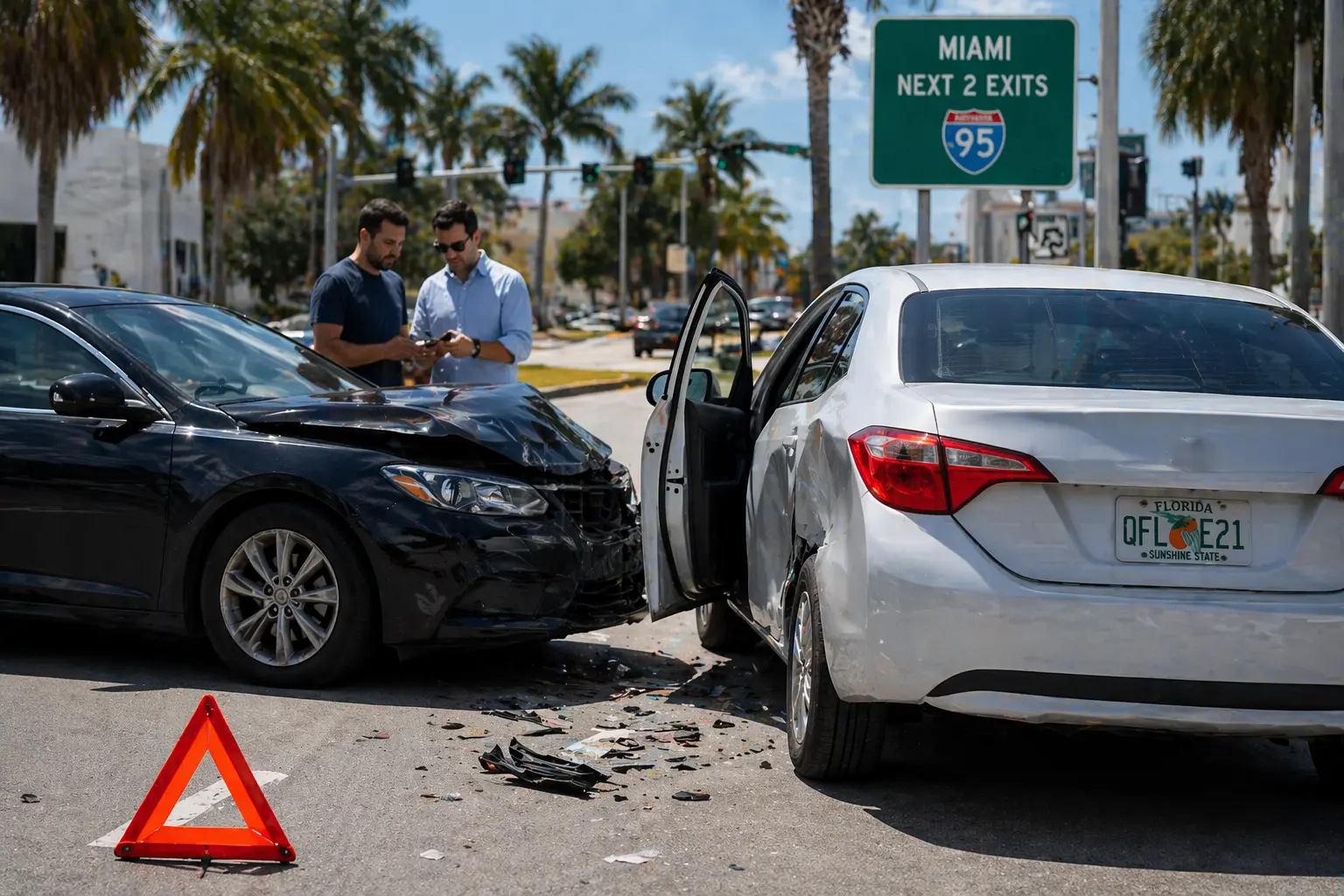
Every Florida car accident claim comes down to one question: how much can you actually recover? The answer depends on a stack of rules most people have never heard of, including Florida’s no-fault PIP system, the serious injury threshold that decides whether you can sue at all, the 2-year statute of limitations after the 2023 tort reform, and the modified comparative negligence rule that can wipe out your case if the defense pins more than half the blame on you.
This guide walks through all of it. By the end, you’ll understand what Florida law actually lets you recover, what it won’t, and where the hidden traps live. Then you can decide whether you need a lawyer, and if you do, what to look for in one.
The Foundation: Florida’s No-Fault PIP System
Florida is a no-fault auto insurance state, which means every driver has to carry Personal Injury Protection (PIP) coverage under Florida Statute 627.736. PIP pays your initial medical bills and lost wages regardless of who caused the crash. The required minimum is $10,000.
Here’s what PIP pays:
- 80% of reasonable and necessary medical expenses
- 60% of lost wages from time off work
- $5,000 in death benefits to surviving family
- Mileage to medical appointments and other necessary out-of-pocket costs
The total cap is $10,000 unless you’re diagnosed with an “emergency medical condition” by a qualifying provider. If your diagnosis doesn’t meet the EMC standard, your PIP is capped at $2,500. This is a huge distinction most people miss.
The 14-Day Rule That Ruins Claims
Florida Statute 627.736(1)(a) requires you to seek initial medical treatment within 14 days of the accident to be eligible for PIP benefits at all. If you wait 15 days, your PIP pays nothing, even if you later develop serious symptoms. This is one of the most common ways people lose coverage they paid for their whole lives.
Practical rule: if you’ve been in a Florida car accident, get evaluated within 14 days no matter how fine you feel. Adrenaline masks injuries. Soft tissue damage often shows up days later. Traumatic brain injury symptoms can emerge a week or more after the crash. Losing PIP because you felt okay on day 1 is the kind of avoidable mistake that costs families tens of thousands of dollars.
When You Can Step Outside the No-Fault System
Florida’s no-fault system is a limited remedy. To sue the at-fault driver for pain and suffering and other non-economic damages, you have to meet the “serious injury threshold” under Florida Statute 627.737. Your injury must involve one of the following:
- Significant and permanent loss of an important bodily function
- Permanent injury within a reasonable degree of medical probability, other than scarring or disfigurement
- Significant and permanent scarring or disfigurement
- Death
This is where medical documentation wins or loses cases. A permanency rating from a treating physician and supporting imaging or diagnostic test results are usually required to clear the threshold. Vague or generalized diagnoses don’t work. This is one of the reasons we push clients to see specialists, not just urgent care.
The Categories of Compensation Available Under Florida Law
Once you’re outside the PIP system and into a fault-based claim, Florida allows recovery in three broad categories: economic damages, non-economic damages, and in rare cases, punitive damages.
Economic Damages
Economic damages are the measurable financial losses caused by the crash. They include:
- Past and future medical expenses, including ER, surgery, physical therapy, prescription medication, and long-term care
- Past lost wages and benefits
- Future loss of earning capacity if your injury prevents you from returning to your prior job
- Property damage to your vehicle and personal items inside it
- Out-of-pocket costs like rental cars, home modifications, and assistive devices
- Household services you can no longer perform (lawn care, cleaning, childcare)
Non-Economic Damages
Non-economic damages compensate for losses that don’t have a direct dollar figure. These include:
- Pain and suffering (physical and mental)
- Mental anguish and emotional distress
- Loss of enjoyment of life
- Loss of consortium (spouse’s claim for the impact on the marriage)
- Disfigurement and scarring
- Inconvenience
Florida doesn’t cap non-economic damages in standard auto cases. Juries set these numbers based on credibility, documentation, and the effect on daily life.
Punitive Damages
Florida Statute 768.72 allows punitive damages only when clear and convincing evidence shows intentional misconduct or gross negligence. Common triggers include drunk driving, street racing, hit-and-run, and rare cases of corporate defendants who knowingly put dangerous drivers or equipment on the road. Punitive damages are generally capped at 3 times compensatory damages or $500,000 (whichever is greater), with exceptions for specific unlawful acts.
Florida’s Modified Comparative Negligence Rule
The 2023 tort reform changed Florida from a pure comparative fault state to a modified comparative fault state under Statute 768.81. If you’re more than 50% at fault for the crash, you recover nothing. At 50% or below, your recovery is reduced by your fault percentage.
This is a meaningful shift. Under the old rule, a plaintiff who was 80% at fault could still recover 20% of damages. Under the new rule, anything above 50% bars recovery entirely. Defense lawyers will work hard to push your share of fault above the 50% line, especially in disputed-liability cases like lane changes, intersection collisions, and left-turn crashes.
The 2-Year Statute of Limitations
Before the 2023 tort reform, Florida gave personal injury plaintiffs 4 years to file a lawsuit. As of 2023, that window is 2 years from the date of the accident. Wrongful death cases also have a 2-year limit. Older articles, older lawyer websites, and even older legal treatises still cite the 4-year rule. Ignore them. Two years is the law.
Claims against government entities under Statute 768.28 have their own notice requirements, including written notice within 3 years and a 6-month pre-suit investigation period.
How Insurance Coverage Decides Your Ceiling
Florida’s biggest trap: the state doesn’t require drivers to carry bodily injury liability coverage. Property damage coverage is required ($10,000 minimum), and PIP is required ($10,000 minimum), but bodily injury is optional. That means many drivers you share the road with carry exactly $0 in BI coverage, and their personal assets are often nowhere near enough to cover a serious injury.
This makes your own uninsured motorist (UM) and underinsured motorist (UIM) coverage the most important insurance you own. If the at-fault driver has no BI, your UM kicks in as if it were their coverage. If the at-fault driver has some BI but not enough, your UIM fills the gap. Florida law allows stacking, meaning if you carry UM on multiple vehicles, the limits can combine.
Other potential coverage sources we check on every case:
- Resident-relative policies (coverage from a household member’s policy)
- Umbrella policies on the at-fault driver
- Commercial policies if the driver was on the job
- Third-party liability (bar under dram shop law, municipality for road defect, product liability for defective parts)
What Affects How Much You Can Actually Recover
- Injury severity, documented with specific diagnoses and objective imaging
- Permanence of injury and impairment ratings
- Quality of medical treatment and adherence to treatment plans
- Available insurance coverage from every possible source
- Clarity of liability (clear-liability cases settle higher than disputed cases)
- Lost wages and career impact
- Venue (county) where the case would be tried
- Quality of legal representation and willingness to litigate
- Timing (settling before maximum medical improvement leaves money on the table)
Realistic Compensation Ranges
Every case is different, and honest lawyers don’t quote settlement numbers before reviewing records. That said, here’s the rough shape of what Florida car accident compensation looks like based on injury severity:
Minor soft tissue injuries: $3,000 to $15,000. Usually resolved through PIP and a small BI claim.
Moderate injuries with some treatment: $15,000 to $75,000. Broken bones without surgery, concussions with full recovery, multi-month physical therapy.
Serious injuries with surgery or permanent impairment: $75,000 to $500,000. Orthopedic surgery, lasting pain, significant lost wages, and permanent impairment ratings.
Catastrophic injuries: $500,000 to several million. Traumatic brain injury, spinal cord damage, amputation, paralysis, and wrongful death cases.
These ranges are starting points, not guarantees. The actual number in your case depends on insurance coverage, liability, documentation, and the quality of representation.
Common Mistakes That Reduce Florida Car Accident Compensation
- Missing the 14-day PIP window
- Giving a recorded statement to the at-fault driver’s insurer
- Accepting the first settlement offer before reaching maximum medical improvement
- Posting about the crash or your recovery on social media
- Delaying or skipping prescribed medical treatment
- Failing to identify every potential coverage source
- Missing the 2-year statute of limitations
- Hiring a firm that only settles and never litigates
How a Florida Car Accident Lawyer Actually Adds Value
Insurance industry data, including a well-known study from the Insurance Research Council, consistently shows that represented claimants recover 3 to 4 times more than unrepresented claimants, even after paying attorney fees. That’s the net, not the gross. The reason isn’t magic. It’s knowing which coverage sources to tap, how to document medical damages, how to push back on lowball offers, and when to file suit.
Within the represented group, firms that will actually take cases to trial consistently get higher offers than firms known for quick settlements. Insurers track which firms will fight and adjust their offers accordingly. This is a real phenomenon, and it matters a lot in moderate-to-serious injury cases.
Talk to a Florida Car Accident Lawyer
United Law Group handles Florida car accident cases from minor fender-benders through catastrophic multi-vehicle crashes. Our consultations are free, our fees are contingent, and we front every cost of litigation. If we don’t recover, you don’t pay.
Call 1-888-508-6483 for a free case review. We answer 24/7.
Frequently Asked Questions
Q: What compensation can I recover after a Florida car accident?
A: Florida drivers can recover medical expenses (past and future), lost wages and lost earning capacity, pain and suffering, property damage, and in severe cases punitive damages. Florida’s no-fault system means your own PIP pays the first $10,000 of medical and wage losses. Beyond that you pursue the at-fault driver’s bodily injury coverage, your UM/UIM policy, and any other applicable insurance. Serious injury claims that break the PIP threshold can recover full economic and non-economic damages.
Q: How long do I have to file a car accident claim in Florida?
A: Florida Statute 95.11 gives you 2 years from the date of the crash to file a personal injury lawsuit. This was reduced from 4 years by a 2023 tort reform law. PIP claims have shorter 14-day medical treatment deadlines. Missing either deadline can bar your claim entirely. Filing early also preserves evidence like traffic camera footage and witness memory.
Q: Do I have to use my own insurance first in Florida?
A: Yes. Florida is a no-fault state, which means your own Personal Injury Protection (PIP) coverage pays the first $10,000 in medical bills and lost wages regardless of fault. You can only pursue the at-fault driver’s insurance if your injuries meet the ‘serious injury threshold’ (permanent injury, significant scarring, permanent disfigurement, or death) or your damages exceed PIP limits.
Q: What is the serious injury threshold in Florida?
A: Florida Statute 627.737 defines the threshold that allows you to sue the at-fault driver for pain and suffering. You must prove permanent injury within a reasonable degree of medical probability, significant and permanent loss of bodily function, permanent scarring or disfigurement, or death. Most traumatic injuries from moderate to severe crashes meet this threshold with proper medical documentation.
Q: Should I accept the insurance company’s first settlement offer?
A: No. First offers almost always undervalue claims substantially. Adjusters are trained to close claims fast and cheap. You cannot know the full value of your case until medical treatment stabilizes, all future care needs are documented, wage loss is calculated, and all liable parties are identified. Once you sign a release you cannot reopen the claim even if injuries worsen.
Q: Can I still recover if I was partially at fault?
A: Yes, up to a point. Florida’s 2023 tort reform changed the comparative negligence rule. If you are 50 percent or less at fault, you can recover damages reduced by your percentage of fault. If you are more than 50 percent at fault, you recover nothing. Defense adjusters push fault percentage hard, which is why early evidence preservation and clear liability documentation matter.