
Florida Hurricane Damage Claims: How to Maximize Your Insurance Payout
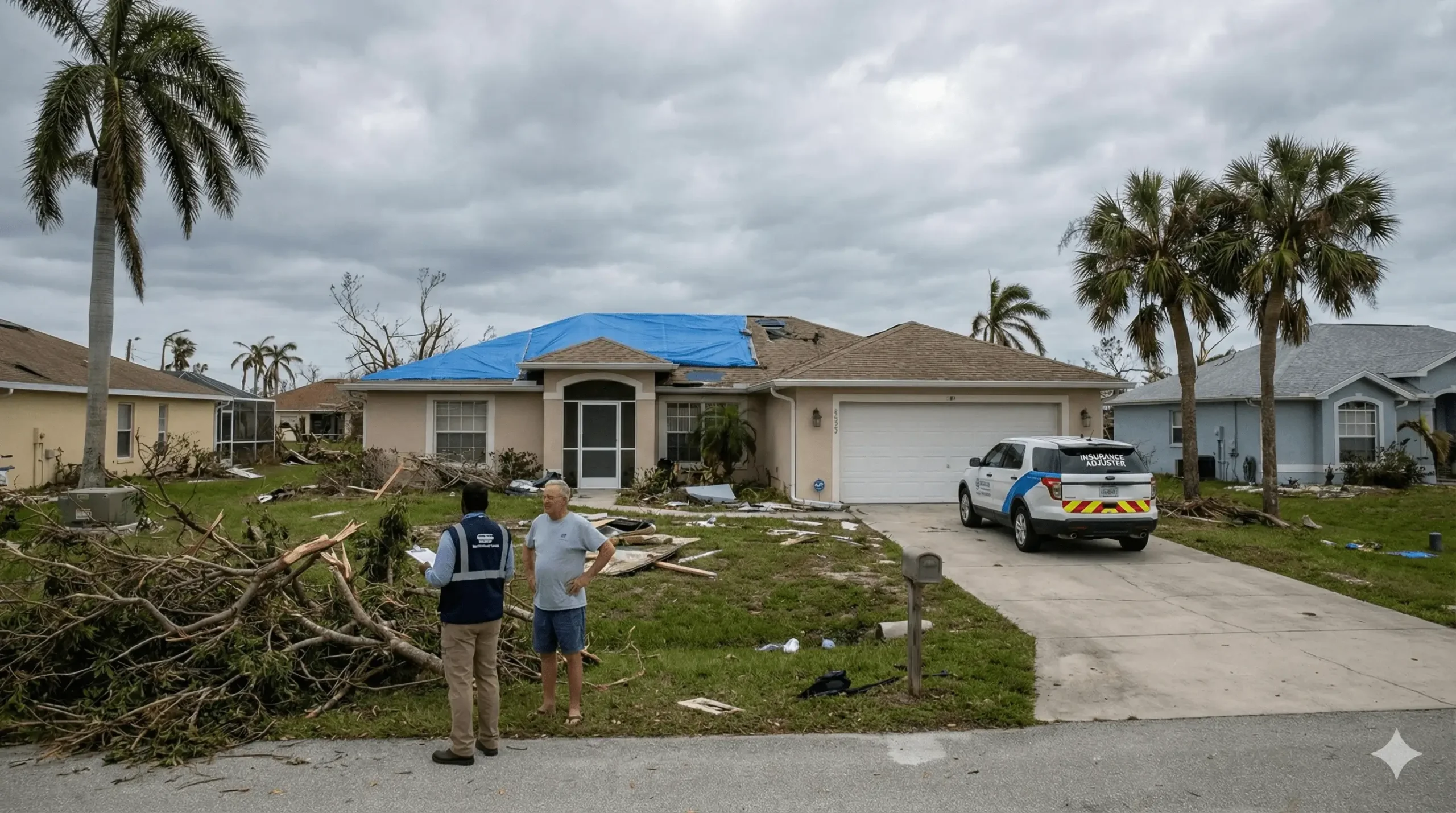
Florida hurricane damage claims frequently turn into disputes over hurricane-related property damage, including roof failures, water intrusion, and insurer compliance with policy terms. Even when storm damage is visible, insurance companies often reduce payouts by relying on technical deadlines and coverage arguments.
Florida homeowners who understand how hurricane-related property damage is evaluated under insurance policies are better positioned to protect their claims and avoid underpayment.
Florida Hurricane Damage Claim Deadlines and Legal Timing Rules
Florida hurricane claims are governed by insurance reporting requirements and legal deadlines that directly affect whether property damage remains compensable.
Deadline to Report Hurricane-Related Property Damage
Homeowners must report hurricane-related property damage within a defined period following landfall. Insurers frequently challenge roof damage and interior water claims when notice is delayed, even if deterioration occurs gradually.
This timing issue commonly impacts Florida property damage claims involving roof failures, ceiling leaks, and progressive moisture intrusion.
Supplemental Deadlines for Newly Discovered Hurricane Damage
Hurricane damage does not always appear immediately. Florida insurance disputes often involve supplemental claims for damage discovered months later, including mold growth, hidden roof leaks, and compromised framing.
Insurers evaluate whether delayed damage can be tied to the original storm rather than ordinary wear or maintenance issues.
Time Limits to Challenge Underpaid or Denied Hurricane Claims
When insurers underpay or deny hurricane-related property damage claims, Florida law limits how long policyholders have to challenge those decisions.
These disputes frequently involve scope disagreements, depreciation calculations, and causation findings made during the adjustment process.
How Insurance Companies Reduce Florida Hurricane Claim Payouts
Many claims escalate into Florida hurricane insurance disputes because insurers rely on narrow policy interpretations that minimize coverage rather than fully evaluating storm impact.
Wind vs. Water Disputes in Hurricane Property Damage Claims
Insurers commonly argue that damage was caused by flooding rather than wind. In Florida claims, establishing wind-driven rain and roof damage disputes is often central to coverage.
These disagreements are common in cases involving shingle loss, roof uplift, broken windows, and wind-created openings.
Misapplication of Florida’s Hurricane Deductible
Florida applies hurricane deductibles on a calendar-year basis, yet insurers often attempt to reapply the deductible after multiple storms.
Disputes regularly arise over Florida hurricane deductible disputes when prior deductible satisfaction is ignored.
Total Loss Disputes Under Florida Insurance Law
When hurricane winds cause catastrophic structural failure, insurers may still dispute whether a property qualifies as a total loss.
Many total loss property insurance disputes focus on whether wind damage alone would have rendered the structure unrepairable.
Florida Hurricane Damage Claim Process and Compliance Requirements
Following Florida insurance claim compliance requirements helps prevent insurers from asserting technical defenses related to notice, mitigation, or documentation failures.
Duty to Mitigate Hurricane Property Damage
Florida insurance policies require reasonable mitigation after a hurricane. Insurers routinely examine mitigation requirements under Florida insurance policies when evaluating interior water damage and mold claims.
Prompt and Accurate Hurricane Claim Reporting
Insurers assess whether timely hurricane damage reporting occurred relative to storm landfall.
Delayed reporting is often used to challenge roof damage, interior water intrusion, and personal property losses.
Independent Documentation of Hurricane Damage
Insurance inspections do not always capture the full scope of loss. Documenting hurricane-related property damage independently helps establish repair scope, replacement costs, and claim value.
Florida Hurricane Damage Claims – Additional Legal Issues
Certain legal issues arise repeatedly in Florida hurricane insurance disputes but are often overlooked early in the claim process.
Reopening Hurricane Claims After Settlement
Florida insurers may allow reopened claims when additional hurricane-related damage is identified within applicable reporting windows.
Coverage for Detached Structures and Exterior Property
Garages, sheds, and exterior structures are frequently disputed after hurricanes, particularly when wind damage is combined with water exposure.
Pre-Existing Damage vs. Storm-Related Damage
Insurers often argue pre-existing conditions to reduce payouts. Florida disputes focus on distinguishing prior wear from new hurricane-caused damage.
Florida Hurricane Damage Legal Support
Hurricane property damage claims often escalate into insurance disputes involving coverage interpretation, repair scope, and payment delays.
A Florida hurricane damage attorney can help enforce policyholder rights when insurers delay, deny, or underpay valid claims.
United Law Group represents Florida homeowners on a contingency basis, no fees unless compensation is recovered. Consultations are confidential.
FAQS
Can hurricane damage claims be reopened in Florida after a settlement?
Yes. If additional storm-related damage is discovered and the policy allows supplemental claims within Florida’s deadlines, previously settled hurricane claims may be reopened.
Do insurance companies have a deadline to pay hurricane claims in Florida?
Florida law requires insurers to acknowledge and investigate claims promptly. Unreasonable delays may violate insurance regulations and support further legal action.
Is roof damage always covered after a Florida hurricane?
Roof damage is often covered when caused by hurricane winds, flying debris, or wind-driven rain. Coverage disputes usually focus on causation rather than the existence of damage.
Can hurricane damage claims affect future insurance premiums?
Filing a hurricane claim may impact premiums or renewal decisions, but Florida law limits certain underwriting practices following catastrophic events.
What if my home was already damaged before the hurricane?
Pre-existing damage does not automatically bar recovery. Insurance companies must distinguish between prior issues and new hurricane-related damage.
Are condo owners and HOA policies treated differently after hurricanes?
Yes. Coverage responsibilities often differ between individual unit owners and associations, especially for roofs, exterior walls, and shared structures.
Can hurricane insurance claims be denied for late inspections?
Delays caused by insurer backlogs or adjuster availability generally should not be used to deny valid hurricane claims when the loss was reported on time.
Do hurricane claims cover temporary housing or loss of use?
Many policies include additional living expense coverage when hurricane damage makes a home uninhabitable, subject to policy limits and documentation.
Should hurricane damage be inspected by an engineer?
Engineering evaluations are often used in disputed claims to establish wind causation, structural impact, and repair scope.
What makes Florida hurricane claims more complex than other states?
Florida’s insurance statutes, hurricane deductibles, and claim deadlines create a uniquely technical landscape that insurers often exploit to reduce payouts.