
What to Know About Roof Damage and Homeowners’ Insurance Claims
Roof damage is one of the most common and most misunderstood homeowners’ insurance claims. Coverage depends on how the damage occurred, how old your roof is, and how your policy is written, not just what the adjuster says.
It explains how roof damage claims actually work, what insurance covers (and excludes), and how homeowners can protect their payout before costly mistakes reduce or eliminate coverage.
Does Homeowners’ Insurance Cover Roof Damage?
Insurance coverage for roof damage is based on the cause of loss, not severity. Policies protect against sudden, accidental events not aging materials or preventable deterioration so insurers focus on how the damage occurred and the roof’s condition before the loss.
Covered Causes of Roof Damage
When damage is tied to a covered peril, insurance may pay for repairs or replacement, depending on policy terms.
- Wind and hurricane damage that lifts or removes shingles
- Hail impacts that bruise shingles or crack tiles
- Falling objects, such as tree limbs or storm debris
- Fire or lightning strikes causing structural damage
- Weight of ice or snow leading to collapse in colder regions
Roof Damage Insurance Commonly Excludes
Insurers frequently deny claims when damage is attributed to age or preventable conditions rather than a sudden event.
- Wear and tear from an aging roof
- Poor maintenance, including clogged gutters or neglected leaks
- Animal or pest damage, such as birds or rodents
- Cosmetic-only damage, where dents do not affect waterproofing
These exclusions are a frequent source of disputes, especially after hailstorms or wind events that leave visible but disputed damage.
Replacement Cost vs. Actual Cash Value: Why Payouts Vary
One of the most important details in any roof insurance claim is how your policy calculates payment. The difference can amount to thousands of dollars.
Replacement Cost Value (RCV)
RCV policies cover the cost to replace your roof at today’s prices without deducting for age. Depreciation is often withheld initially but released after repairs are completed.
Actual Cash Value (ACV)
ACV policies subtract depreciation based on the roof’s age and condition. Older roofs frequently receive significantly reduced payouts, even after major storms.
Many insurers now shift roofs older than 10–15 years to ACV coverage at renewal through endorsements that limit roof payments, a practice frequently disputed in Florida property damage claims and Texas wind and hail insurance disputes. Reviewing your declarations page before filing helps avoid unexpected valuation reductions.
How the Roof Damage Claim Process Works
Filing a roof claim correctly can determine whether coverage is approved, reduced, or denied. Insurers expect homeowners to follow specific steps.
Document the Damage Immediately
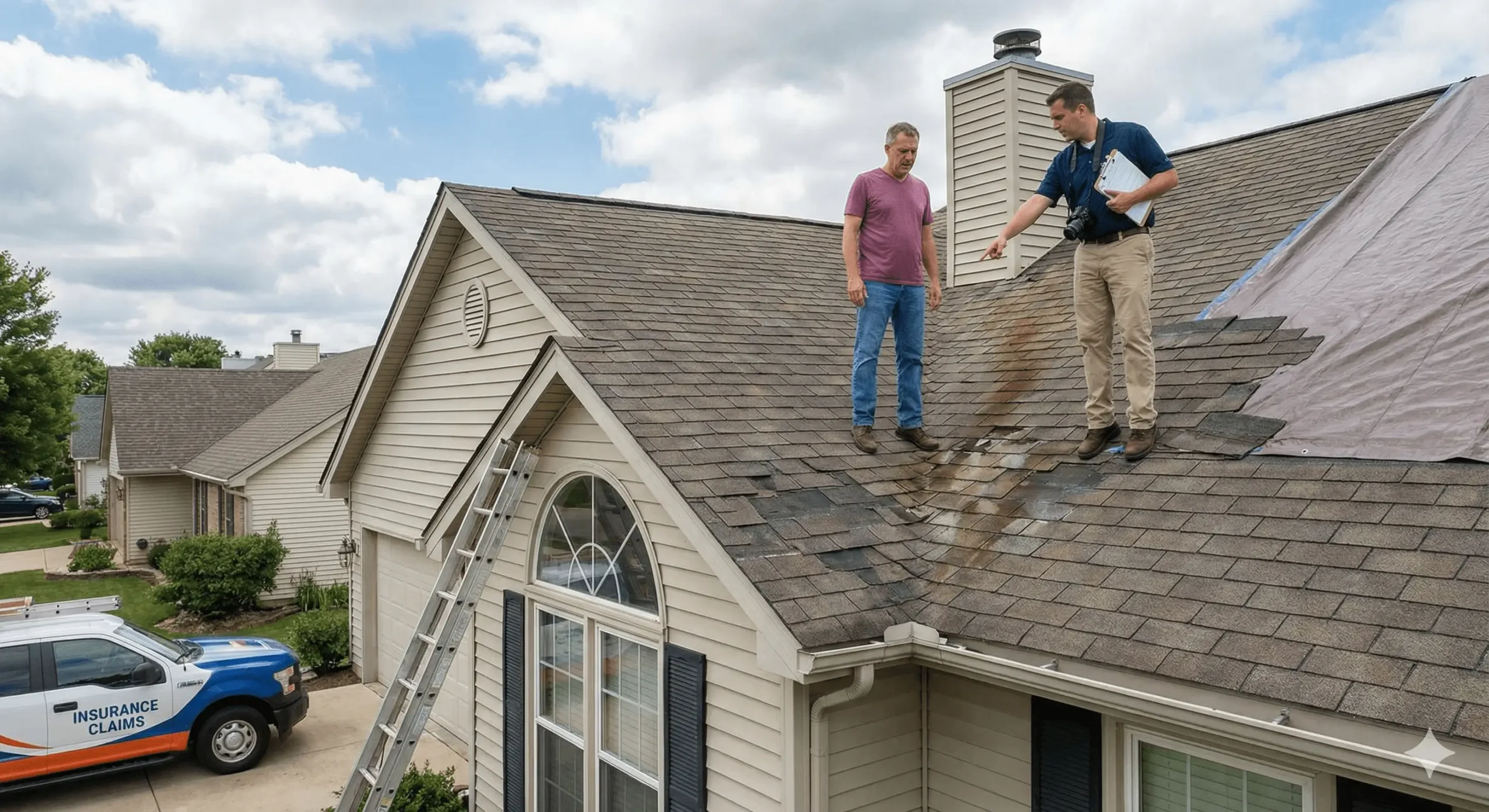
Photograph visible roof damage, fallen shingles, dented gutters, and interior water stains. Avoid climbing on unsafe roofs and document conditions before cleanup begins.
Prevent Further Damage
Most policies require homeowners to mitigate additional loss. Emergency tarping or temporary repairs are usually reimbursable when properly documented.
Get a Professional Inspection First
Having a qualified roofer inspect the damage before filing helps determine whether the claim exceeds your deductible and avoids unnecessary zero-payment claims on your record.
Meet the Insurance Adjuster Prepared
When the adjuster inspects the property, ensure all damaged components are included in the scope of loss not just shingles, but flashing, vents, underlayment, and gutters.
Why Roof Insurance Claims Get Denied
Roof claims are often denied for reasons that can be challenged with proper evidence.
Age-Related Damage Arguments
Insurers may claim damage is from normal aging rather than a storm. Clear photos of fresh impact marks or independent inspections can help dispute this conclusion.
Late Reporting
Many policies enforce strict deadlines. In states like Florida, missing the reporting window can automatically bar coverage, regardless of damage severity.
Shingle Matching Issues
When replacement shingles are discontinued, insurers may attempt partial repairs. In states with matching requirements, homeowners may be entitled to a full replacement to maintain a uniform appearance a common issue in Florida property damage claims.
State-Specific Factors That Affect Roof Claims
Roof damage insurance rules vary by state, and applying the wrong standard can significantly reduce coverage. Florida homeowners face strict hurricane reporting deadlines and roof-matching disputes, while Texas homeowners commonly encounter separate wind and hail deductibles that increase out-of-pocket costs.
When Legal Help Becomes Important
Disputes over roof damage often arise when insurers minimize payouts, deny matching requirements, or misapply depreciation. In these situations, working with a firm experienced in property damage insurance claims can help homeowners enforce policy rights and challenge improper claim handling.
United Law Group represents homeowners across Florida and Texas in insurance disputes involving roof damage, denied claims, underpaid settlements, and coverage disagreements related to wind, hail, and hurricane losses.
How Roof Damage Claims Connect to Broader Property Damage Disputes
Roof damage rarely exists in isolation. Disputes over roofing often overlap with interior water damage, exterior envelope failures, and carrier practices seen in broader property damage insurance claims, particularly when insurers attempt to narrow the scope of loss.
In Florida, roof claims frequently intersect with matching statutes and hurricane endorsements, while Texas homeowners often encounter valuation disputes tied to wind and hail deductibles.
Frequently Asked Questions
Can homeowners choose their own roofer for an insurance claim?
Homeowners generally have the right to select their own contractor, as long as repairs meet policy requirements and local building codes.
What happens if roof repairs cost less than the deductible?
When repair costs fall below the deductible, insurance will not issue payment, and the claim may still appear on your insurance record.
Are multiple roof leaks treated as separate claims?
Leaks caused by a single storm are often treated as one occurrence, while damage from unrelated events may be evaluated separately.
Does interior water damage change roof claim coverage?
Interior damage can support a roof claim by showing functional failure, but coverage still depends on whether the roof damage resulted from a covered peril.
Protecting Your Roof Claim
Roof damage claims are rarely straightforward due to policy restrictions and aging-roof endorsements. Knowing your coverage, documenting damage properly, and challenging improper denials can directly impact the outcome.
If your roof damage claim has been delayed, underpaid, or denied, United Law Group can review your policy and help you pursue the benefits you are entitled to under the law.
Request a free case evaluation to understand your options before accepting a reduced settlement.