
Rideshare Accident Lawyer: Uber and Lyft Claims in Florida and Texas
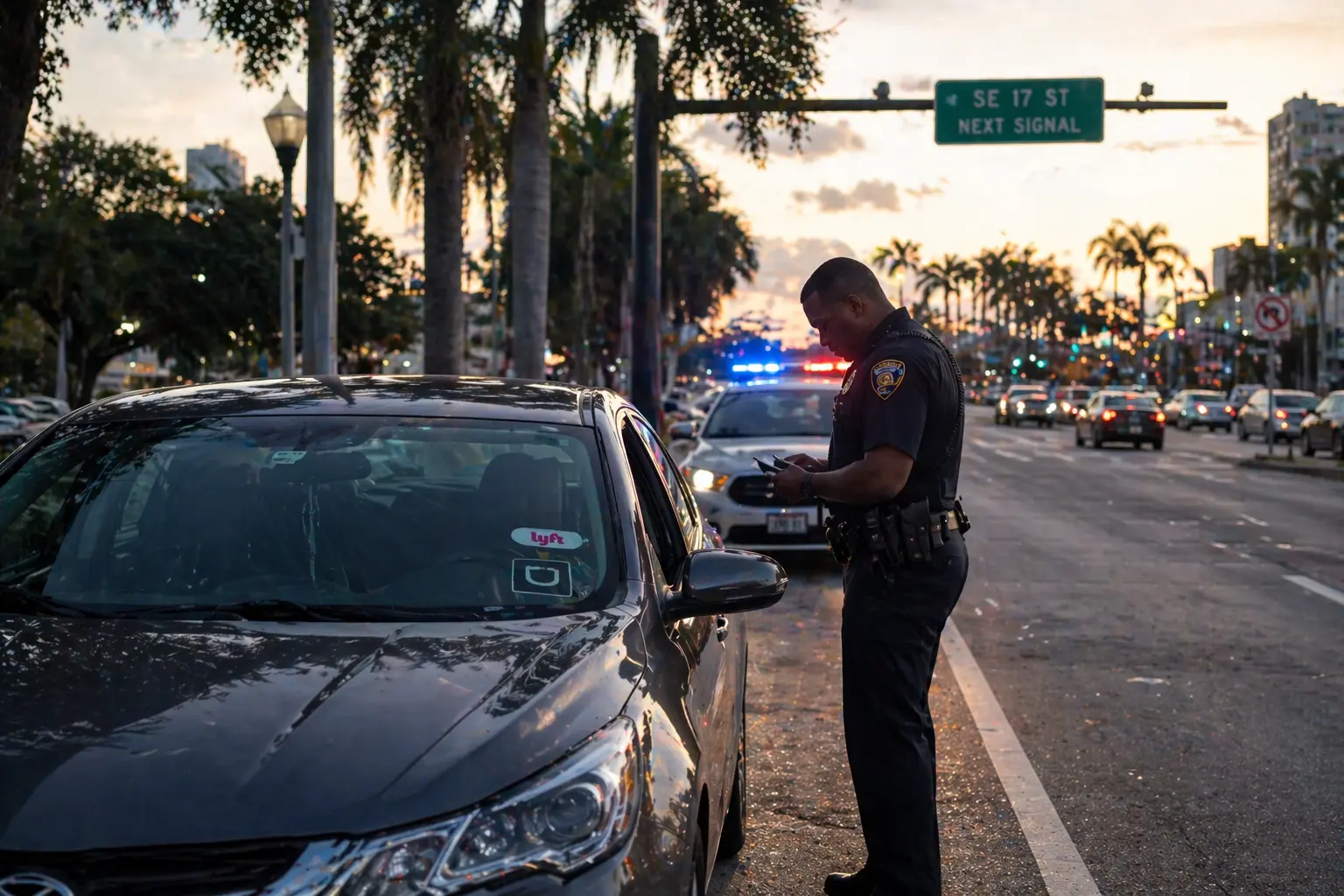
A rideshare accident lawyer earns the fee one way: by finding every insurance policy that touches your crash and forcing each one to pay in the right order. After an Uber or Lyft accident in Florida or Texas, as many as four separate policies can owe you money at the same time. Most injured riders find one, settle cheap, and never learn the other three existed.
This guide covers both states because United Law Group fights these cases in both. You will see who pays at each stage of the trip, how the policies stack on top of each other, which deadlines control your claim, and the exact places where good cases quietly die.
Quick answer: If the Uber or Lyft driver had accepted a trip or carried a passenger, a $1,000,000 commercial policy covers the crash in both Florida (Section 627.748, Florida Statutes) and Texas (Insurance Code Chapter 1954). If the app was on with no trip accepted, coverage drops to $50,000 per person and $100,000 per crash. If the app was off, the driver’s personal auto policy is the only rideshare-side target.
Who pays after an Uber or Lyft accident
Rideshare insurance runs on a three-period system, and both states wrote the periods directly into statute. The moment of the crash decides which policy answers, so the driver’s app data matters more than almost any other piece of evidence in the file.
- Period 1, app on and waiting for a request. Uber and Lyft provide contingent coverage of $50,000 per person and $100,000 per accident for bodily injury, plus $25,000 for property damage. The driver’s personal policy gets the first look, and most personal policies exclude commercial driving, so this tier strands many victims between two carriers pointing at each other.
- Period 2, trip accepted and driver on the way to pickup. The $1,000,000 commercial policy activates and stays primary until the passenger leaves the car.
- Period 3, passenger in the vehicle through drop-off. The full $1,000,000 policy covers injured passengers, pedestrians, cyclists, and occupants of other vehicles the rideshare driver hits. Uninsured and underinsured motorist coverage rides along in most of these commercial policies as well.
The gap between Period 1 and Period 3 can swing a case by hundreds of thousands of dollars. Adjusters know it, which is why the first fight in many rideshare claims is a fight about what the app showed at the moment of impact. Trip logs settle that argument, and they come out through a preservation letter and subpoena, not a polite phone call.
Five crash patterns and where each one stands
- You rode as the passenger. The strongest position on the board. You carry zero fault, and the $1,000,000 policy answers no matter which driver caused the crash.
- A rideshare driver hit your car. You claim against the Uber or Lyft commercial policy, and the coverage period sets the ceiling. Trip logs decide whether that ceiling reads $50,000 or $1,000,000.
- You were walking or cycling. Pedestrians and cyclists reach the same commercial policy, and both states reduce recovery by your share of fault, so scene evidence carries extra weight.
- You drive for Uber or Lyft and someone hit you. Your own personal policy may exclude commercial use, so the claim usually runs against the at-fault driver first, then the rideshare UM/UIM layer.
- Multi-vehicle pileups. Rideshare crashes on I-4, I-95, I-45, and I-10 routinely involve three or more policies, and sorting liability across them is where cases get won or lost.
The first 24 hours: six steps that protect the claim
Evidence in rideshare cases decays fast. The trip screen disappears, witnesses scatter, and adjusters start calling within days. Work through these six steps in order.
- Screenshot the app before you close it. Capture the trip screen, the driver profile, and the receipt. The screenshots prove ride status at the moment of the crash, and ride status decides which policy pays.
- Call 911 and wait for the report. Florida Statute 316.066 requires a report for injury crashes, and Texas law does the same. Claims without a police report settle for less, every time.
- See a doctor fast. Florida’s PIP statute, Section 627.736, cuts off Personal Injury Protection benefits unless you receive initial treatment within 14 days of the crash. Texas carries no PIP deadline like that, but a two-week treatment gap hands the adjuster a causation argument in either state. Whiplash, concussions, and soft tissue injuries often surface 48 to 72 hours later, so go even when you feel fine.
- Report the crash inside the Uber or Lyft app within 24 hours. The in-app report opens the commercial insurance file and ties the trip data to a claim number. Save the confirmation.
- Photograph everything. Vehicle positions, damage on every car, plates, street signs, signals, skid marks, and your visible injuries. Collect a name and phone number from every witness before they drive away.
- Decline recorded statements. Three insurers may call within days, and each records calls to mine them for admissions. Give basic facts to your own carrier if your policy requires cooperation, and route everyone else to your lawyer.
How the policies stack
Stacking is where rideshare cases pull away from ordinary crashes. A single Period 3 crash can open four sources of recovery at once:
- Your own PIP, in Florida, pays 80% of medical bills and 60% of lost wages up to $10,000, no matter who caused the crash.
- The at-fault driver’s liability policy pays next, whether that driver was the rideshare driver or a third party.
- The rideshare commercial policy answers for what the at-fault driver’s limits cannot cover, up to $1,000,000 during an active trip.
- Uninsured/underinsured motorist coverage, on the commercial policy or your own, fills the gap when the at-fault driver carries thin limits.
Run the math on a common pattern. A third-party driver with a $25,000 policy causes the crash while you ride in the back of an Uber, and your medical bills reach $180,000. PIP pays its $10,000, the at-fault carrier tenders its $25,000 limit, and the UM/UIM layer on the rideshare policy answers for the remaining damages. Victims who never learn about that third layer settle for $35,000 on a case worth several times more.
The order of operations matters too. Accept a liability settlement without the UM/UIM carrier’s written consent and some policies void the underinsured layer entirely. Each policy has notice requirements, consent clauses, and offset rules, and one signature in the wrong sequence can erase the largest source of recovery in the stack.
Florida rideshare claims: the rules that move money
Florida starts every crash claim inside its no-fault system. Your own PIP pays first, and Section 627.736 caps it at $10,000 with the 14-day treatment deadline described above. A single emergency room visit with imaging can burn through that limit before the first follow-up appointment.
To recover pain and suffering, your injury must clear the serious injury threshold in Section 627.737: significant and permanent loss of an important bodily function, permanent injury within a reasonable degree of medical probability, significant scarring or disfigurement, or death. Broken bones, herniated discs, and brain injuries clear that bar routinely, and rideshare crashes produce all three.
Fault-sharing follows a modified comparative negligence rule under Section 768.81. Juries assign percentages, your award drops by your share, and a finding above 50% ends the claim at zero. Defense adjusters push comparative fault hard in rideshare cases for exactly this reason.
The filing deadline runs two years from the crash under Section 95.11, shorter than most people remember because the legislature cut it from four years in March 2023. Our Florida personal injury team files well before the deadline, because settlement power comes from a trial date the insurer believes in.
Texas rideshare claims: how the rules change
Texas runs a pure at-fault system with no mandatory PIP. Insurers must offer $2,500 in optional PIP under Insurance Code Section 1952.152, and that coverage sits on your policy unless you rejected it in writing, so check before assuming you have nothing.
Insurance Code Chapter 1954 mirrors Florida’s rideshare tiers: 50/100/25 while the app waits for a trip, and $1,000,000 from trip acceptance through drop-off. The statute applies statewide, so a crash in Houston follows the same coverage ladder as one in Dallas or Austin.
Fault-sharing follows proportionate responsibility under Civil Practice and Remedies Code Chapter 33, with the same 51% bar that ends a claim outright. The filing deadline runs two years under Section 16.003.
Houston deserves its own sentence. Harris County generates more rideshare trips than any other Texas market, and its share of serious rideshare crashes runs just as high. Our Texas personal injury team handles rideshare claims across the state.
What a rideshare claim could be worth
No lawyer can price your case from a blog post, and you should distrust any who tries. These ranges reflect how rideshare settlements in Florida and Texas commonly land once liability is clear and treatment is complete:
- Soft tissue injuries with full recovery: $15,000 to $75,000
- Injuries needing injections, or simple fractures: $75,000 to $200,000
- Surgical cases, including spinal fusion and hardware: $200,000 to $750,000
- Traumatic brain injury, paralysis, or a family member lost in the crash: $750,000 up to and past the $1,000,000 policy
Recoverable damages include current and future medical care, lost wages and earning capacity, pain and suffering, mental anguish, disfigurement, and property damage. Medical liens and subrogation claims come out of the settlement before you see a dollar, and handling them well changes your net recovery by tens of thousands. Read how medical liens and subrogation work before you sign anything.
Five mistakes that kill rideshare claims
- Closing the app without screenshots. Ride status becomes a swearing match instead of a fact, and the coverage period fight starts on the insurer’s terms.
- Missing Florida’s 14-day PIP window. The $10,000 first layer disappears over a calendar error, and courts enforce the deadline without sympathy.
- Taking the early offer. Rideshare insurers move fast on serious cases precisely because the policy is large. A $15,000 check in week three often buys a release on a $300,000 claim.
- Guessing at the coverage period. Only the trip logs prove Period 1 versus Period 3, and the difference between them can be $900,000 of available coverage.
- Posting on social media. Defense teams screenshot everything, and one gym photo outweighs three medical opinions in front of a jury.
Cases we take, and cases we point in the right direction
We say yes to rideshare cases that fit this profile:
- You were a passenger, pedestrian, cyclist, or another driver hurt by an Uber or Lyft driver in Florida or Texas
- Your medical bills passed $10,000, or the injury needed surgery, injections, or ongoing care
- A family member died in a rideshare crash
- The insurers dispute which coverage period applies
- A lowball offer landed before you finished treatment
A minor fender-bender with no injuries and a few hundred dollars of bumper damage does not need a contingency lawyer, and we will tell you so on the first call. Property-only disputes route to the carrier directly, and we point you to the right process for free.
How long a rideshare case takes
Most rideshare cases resolve in 6 to 18 months. Claims with clear liability and finished treatment settle fastest. Coverage period disputes, long treatment plans, and litigation stretch the timeline to 18 to 30 months. Pulling trip data from Uber or Lyft alone can take months, which is one more reason to start early instead of racing the two-year deadline.
The sequence matters more than the speed. Settle before your doctors project future care and the number leaves that care out forever. A demand package built after maximum medical improvement, with every lien mapped and every policy identified, walks into negotiation with nothing left for the adjuster to discount. That patience is usually worth more than any single argument your lawyer will make.
How United Law Group handles rideshare cases
Jack Vasilaros built this firm on one rule: treat clients like family, not a file number. Our personal injury attorneys handle rideshare crashes across Florida and Texas from our Largo headquarters, and we know the Uber and Lyft insurance playbook because we work against it every month.
We front every cost, we send the preservation letters that lock down trip data before it ages off, and we work on contingency. No fee unless we win. The first conversation is free, and you leave it knowing which policies apply to your crash and what the claim looks like from our side of the table.
Start with a free case evaluation or call 727-306-3324. Bring the screenshots.
Frequently Asked Questions
Who pays after an Uber or Lyft accident?
The policy that pays depends on the driver’s app status. During an active trip, the rideshare company’s $1,000,000 commercial policy covers injured passengers, pedestrians, and other drivers in both Florida and Texas. App on without a trip drops coverage to $50,000 per person. App off leaves only the driver’s personal auto policy, plus your own coverage.
Does Uber’s $1 million insurance cover my injuries?
Yes, when the crash happened during an active trip, from ride acceptance through drop-off. As a passenger you can claim against that policy regardless of who caused the crash, and uninsured/underinsured motorist coverage typically rides along. Proving the trip was active with app screenshots and trip logs is the key step.
What should I do after a rideshare accident?
Screenshot the app before closing it, call 911, and get medical care fast. Florida cuts off PIP benefits unless treatment starts within 14 days. Report the crash in the app, photograph the scene, collect witness contacts, and decline recorded statements from every insurer until you have talked to a lawyer.
Can I sue Uber or Lyft directly?
Rarely. Both companies classify drivers as independent contractors, so claims run against their commercial insurance policies instead of the companies themselves. The $1,000,000 policy covers most serious cases during active trips. Direct corporate suits appear in negligent-vetting and vicarious liability theories, and those are the exception.
How long does a rideshare accident case take to settle?
Most resolve in 6 to 18 months. Clear-liability cases with finished medical treatment settle fastest. Coverage period disputes, serious injuries with long treatment, and litigation stretch cases to 18 to 30 months. Rushing a settlement before treatment ends is how victims leave six figures behind.
What if the driver’s app was off?
The crash becomes an ordinary car accident. You claim against the driver’s personal auto policy, use your own PIP in Florida, and tap your own UM/UIM coverage if limits run short. No rideshare corporate coverage applies with the app fully off.
Get a Free Case Review
Bring us the app screenshots and the police report number, and we will tell you in one conversation which policies apply and what your claim looks like. No fee unless we win.