
Florida Dog Bite Lawyer: Strict Liability, Owner Excuses, and Real Case Value
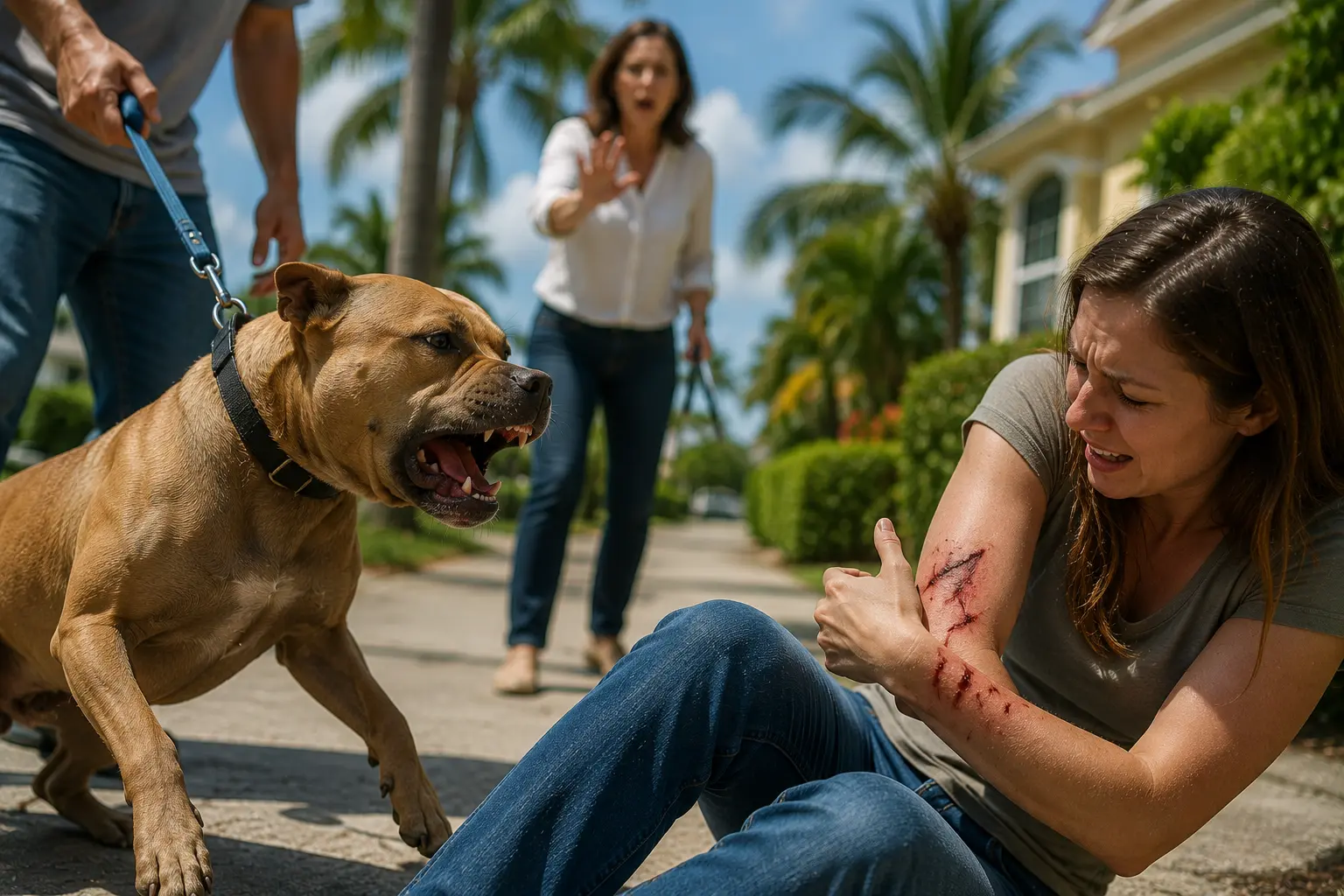
The first thing a dog bite lawyer Florida victims call will tell you is the good news: this state gives bite victims one of the strongest laws in the country, and the dog’s owner almost never pays out of pocket. The second thing is the catch: the same law hands owners a set of defenses, and insurers know every one of them.
Quick answer: Section 767.04, Florida Statutes, makes dog owners strictly liable when their dog bites someone in a public place or lawfully in a private place. No prior bite, no known viciousness, no negligence required. Florida rejected the ‘one free bite’ rule other states use. Your recovery drops by your own share of fault, a posted ‘Bad Dog’ sign can defeat claims by adults, and the deadline to sue is two years. Homeowner’s or renter’s insurance pays in most cases.
What strict liability actually means
Most injury claims require proving someone did something careless. Florida dog bite claims skip that step entirely. Under Section 767.04, the owner is liable because the bite happened, full stop. It doesn’t matter that Max never bit anyone before, that he’s gentle with the kids, or that the owner had him leashed and did everything right. The legislature decided that owners bear the risk their animals create, from the first bite onward.
Compare that to the ‘one bite rule’ states, where a victim has to prove the owner knew the dog was dangerous, usually through a prior bite. In those states, first victims often recover nothing. In Florida, the first victim holds the same claim as the tenth. When someone tells you ‘the dog’s never done this before,’ the legal answer is that it doesn’t matter.
Who actually pays: the insurance reality
Bite victims hesitate to pursue claims because the owner is a neighbor, a relative, or a friend. Understand where the money comes from: homeowner’s and renter’s insurance policies cover dog bite liability in most cases, and the national insurance industry pays out hundreds of millions of dollars in dog bite claims every year, at an average now approaching $60,000 per claim. Your claim targets a policy the owner already paid for, exactly the situation it exists to cover. The friendship conversation gets easier when everyone understands the insurer, and never the neighbor, writes the check.
Two wrinkles need checking early. Some policies exclude specific breeds, and some owners carry no insurance at all, which changes the strategy conversation honestly and immediately. And when the bite happened at a rental property, a landlord who knew a dangerous dog lived there can sometimes share liability, opening a second policy.
The defenses owners and insurers actually use
Strict liability doesn’t mean automatic payment. Section 767.04 and Florida’s comparative fault rules give the defense a short, predictable playbook:
- Comparative negligence. Your recovery drops by your percentage of fault. Teasing, provoking, or startling the dog becomes the insurer’s favorite story, and under Section 768.81 a finding over 50% ends the claim.
- The ‘Bad Dog’ sign. An owner who prominently displays an easily readable sign including the words ‘Bad Dog’ escapes statutory liability for bites on their property, with one major exception: the sign defense fails entirely when the victim is a child under 6.
- Lawful presence. The statute protects people in public places or lawfully on private property, including mail carriers and invited guests. Trespassers fall outside it, though other legal theories occasionally reach them.
- Injury minimizing. When liability is unbeatable, insurers argue the bite wasn’t that bad. Photos taken through healing, scar documentation, and psychological records answer it.
Children: the victims the law protects most
Children make up a huge share of serious bite victims, and their injuries land on faces and hands at heights where dogs meet toddlers. Florida law leans hard in their favor: comparative fault arguments against small children mostly fail, and the Bad Dog sign defense expressly cannot be used against a child under 6. Facial scarring cases involving children carry the highest values in this practice area, because juries award for the scar itself, the surgeries ahead, and a childhood spent explaining it. Psychological care belongs in these claims too. A child who becomes terrified of dogs after an attack has a real, compensable injury.
What a Florida dog bite settlement looks like
The honest ranges, driven by scarring, infection, surgery, and psychological harm:
- Puncture wounds treated and healed without scarring: $10,000 to $30,000
- Bites needing stitches or leaving modest scarring: $30,000 to $75,000
- Serious bites with reconstructive surgery, nerve damage, or infection complications: $75,000 to $250,000
- Severe facial scarring, especially in children, and mauling injuries: $250,000 and up, policy limits permitting
Recoverable damages include medical care, future revision surgeries, lost wages, pain, disfigurement, and psychological treatment. Infection deserves its own line: dog mouths seed capnocytophaga and other bacteria, and a bite that looked minor on Tuesday can hospitalize you by Friday, which is one reason immediate medical care protects both your health and your claim. The scarring line item drives more value than most victims expect. A revision surgery quoted at $15,000, scheduled two years out, has to appear in the demand package now or it never gets paid, and plastic surgeon consult notes are how it gets documented. Insurers price what’s on paper, never what’s probable. The same logic covers psychological care for children: a treating therapist’s plan for ongoing sessions turns ‘the kid seems scared of dogs now’ into a priced, payable line of damages. Liens come out of settlements here like everywhere, and our guide to medical liens and subrogation covers protecting your net recovery.
What to do after a dog bite in Florida
- Wash the wound and get medical care the same day. Bite infections escalate fast, and the medical record ties the injury to the attack.
- Identify the dog and the owner: name, address, phone. Ask for proof of rabies vaccination. If the owner won’t cooperate, neighbors and doorbell cameras usually will.
- Report the bite to animal control or the county health department. The report creates an official record, documents the dog’s history for the next victim, and triggers rabies protocols. Unvaccinated dogs mean quarantine observation, and unknown dogs can mean post-exposure shots for you, so the vaccination answer matters for your health as much as your claim.
- Photograph everything on a schedule: the wounds the day of, during healing, and after. Scars photograph differently at week one and month six, and both photos matter.
- Get witness contacts, and note exactly where the bite happened. Public place versus private property, and lawful presence, are elements of the claim.
- Decline recorded statements from the owner’s insurer and skip apologetic conversations with the owner. ‘I’m sure it was partly my fault’ shows up in claim files with remarkable regularity.
Beyond bites: knockdowns, chases, and scratch injuries
Section 767.04 covers bites specifically, but dogs injure people other ways: a large dog knocks an elderly walker to the pavement, a chase sends a cyclist into a curb, a jumping dog’s claws tear skin. Florida law reaches these through Section 767.01, which holds owners responsible for damage their dogs cause generally, and through ordinary negligence claims. The proof differs, the recovery doesn’t. A hip fractured by a knockdown claims the same medical costs, pain, and lost wages as one caused any other way, and the same homeowner’s policy answers.
Landlords, sitters, and other defendants
The owner is the default defendant, and sometimes the wrong or insufficient one. A landlord who knew a tenant kept a dangerous dog and did nothing can share liability, which matters most when the tenant carries no insurance and the landlord does. Dog sitters, walkers, and kennels controlling the animal when it attacked bring their own exposure and sometimes commercial policies. Part of the intake work in every bite case is mapping who controlled the dog, who knew what, and which policies exist, because collectability decides whether a strong liability case is worth anyone’s time. Our overview of common personal injury case types shows where bite claims sit in the wider practice.
How a bite claim actually unfolds
Most bite claims never see a courtroom. The sequence runs: medical treatment and documentation first, an insurance claim against the owner’s homeowner’s policy, a demand package once scarring stabilizes, and negotiation. Insurers settle clean strict-liability cases because trial risk is real and sympathy runs with victims, especially children. Cases go to suit when the insurer disputes lawful presence, pushes a provocation story, or lowballs a scarring valuation. Timeline: simple cases resolve in 4 to 8 months, scarring and child cases run longer because settling before the scar matures is the classic error, and litigation adds a year or more when needed.
The two-year clock
Florida gives you two years from the bite to file suit under Section 95.11. Scarring cases complicate the timing: a scar’s final appearance, and a child’s need for future revision surgery, may not be clear for a year or more. The claim needs to account for those future costs before any release gets signed, which argues for starting early and settling late, never the reverse.
Bitten on the job: delivery drivers, mail carriers, and home service workers
Section 767.04 names lawful performance of duty explicitly: mail carriers, delivery drivers, meter readers, and service technicians on a property to do their jobs stand fully inside the statute’s protection. These cases add a second layer, because a worker bitten on the clock usually holds a workers’ compensation claim against their employer’s coverage alongside the liability claim against the dog owner. The two claims interact: comp pays quickly but takes a lien on the liability recovery, and coordinating them wrong leaves money on the table. Bring both claim numbers to the consultation and we’ll sequence them properly.
What happens to the dog, honestly
The question that stops victims from reporting: ‘will they put the dog down?’ Almost never, for a first bite. Florida’s dangerous dog process under Chapter 767 runs on investigation and classification, and a first incident typically produces registration requirements, confinement rules, and insurance obligations for the owner rather than anything worse. Severe or repeated attacks change that calculus, and that’s precisely the point of reporting: the record you create is what protects the next child on that street. Your insurance claim and the dog’s fate run on separate tracks, and pursuing one doesn’t decide the other.
Five mistakes that shrink bite claims
- Skipping the doctor because the wound looked clean. Infection risk aside, an undocumented bite becomes a he-said case.
- Not reporting to animal control out of sympathy for the dog. The report protects the next victim and your claim; the dog’s outcome is a separate process with its own protections.
- Apologizing to the owner or minimizing in texts. Friendly words become fault evidence.
- Settling before scars mature. Revision surgery priced at zero stays at zero after the release.
- Assuming no case exists because the owner is family or a friend. The homeowner’s policy exists for this, and most relationships survive an insurance claim better than an unpaid hospital bill.
Cases we take
We take Florida bite cases with real medical treatment: stitches, surgeries, infections, scarring, and every case involving a child’s face or hands. We take cases against insured owners, landlords who knew, and, where coverage exists, dog sitters and kennels. A nip that broke no skin and needed no care doesn’t need a lawyer, and a case against an uninsured owner with no assets needs a straight conversation about collectability, which we’ll have with you for free before anyone signs anything.
How United Law Group handles bite cases
Jack Vasilaros built this firm on treating clients like family, and our Florida personal injury team handles bite cases across the state on contingency. We front the costs, document the scarring properly, and price the future surgeries before the insurer prices the past ones.
Start with a free case evaluation or call 727-306-3324. Photos of the wound and the owner’s contact information are the two most useful things you can possibly bring.
Frequently Asked Questions
Is Florida a strict liability state for dog bites?
Yes. Section 767.04 makes owners liable for bites in public places or when the victim is lawfully on private property, regardless of the dog’s history or the owner’s care. Florida rejected the ‘one free bite’ rule; the first bite creates full liability.
How much is a dog bite settlement in Florida?
Treated punctures without scarring commonly resolve between $10,000 and $30,000, scarring cases between $30,000 and $250,000 depending on severity, and severe facial scarring, especially in children, above that. The insurance industry’s average paid dog bite claim now approaches $60,000.
Can I sue for a dog bite in Florida?
Yes, if the bite happened in a public place or while you were lawfully on private property, and you’re within two years of the bite. In practice most claims resolve against the owner’s homeowner’s or renter’s insurance without a lawsuit.
Is it worth suing for a dog bite?
When there’s real medical treatment, scarring, or a child victim, usually yes, because insurance pays and strict liability removes the hardest part of proving the case. When there’s no insurance and no treatment, usually no, and an honest lawyer says so up front.
How much does a dog bite attorney cost?
Nothing up front on contingency. The fee is a percentage of the recovery, stated in writing before you sign, and Florida Bar rules cap standard contingency fees. No recovery, no fee.
Does a ‘Beware of Dog’ sign protect the owner?
Only a prominently displayed, easily readable sign including the words ‘Bad Dog’ triggers the statutory defense, only for bites on the owner’s property, and never against a child under 6. Many posted signs don’t meet the standard.
Get a Free Case Review
Send us photos of the injury and the owner’s information, and we’ll tell you in one conversation whether the coverage and the case are there. No fee unless we win.