
What To Do After a Car Accident in Florida
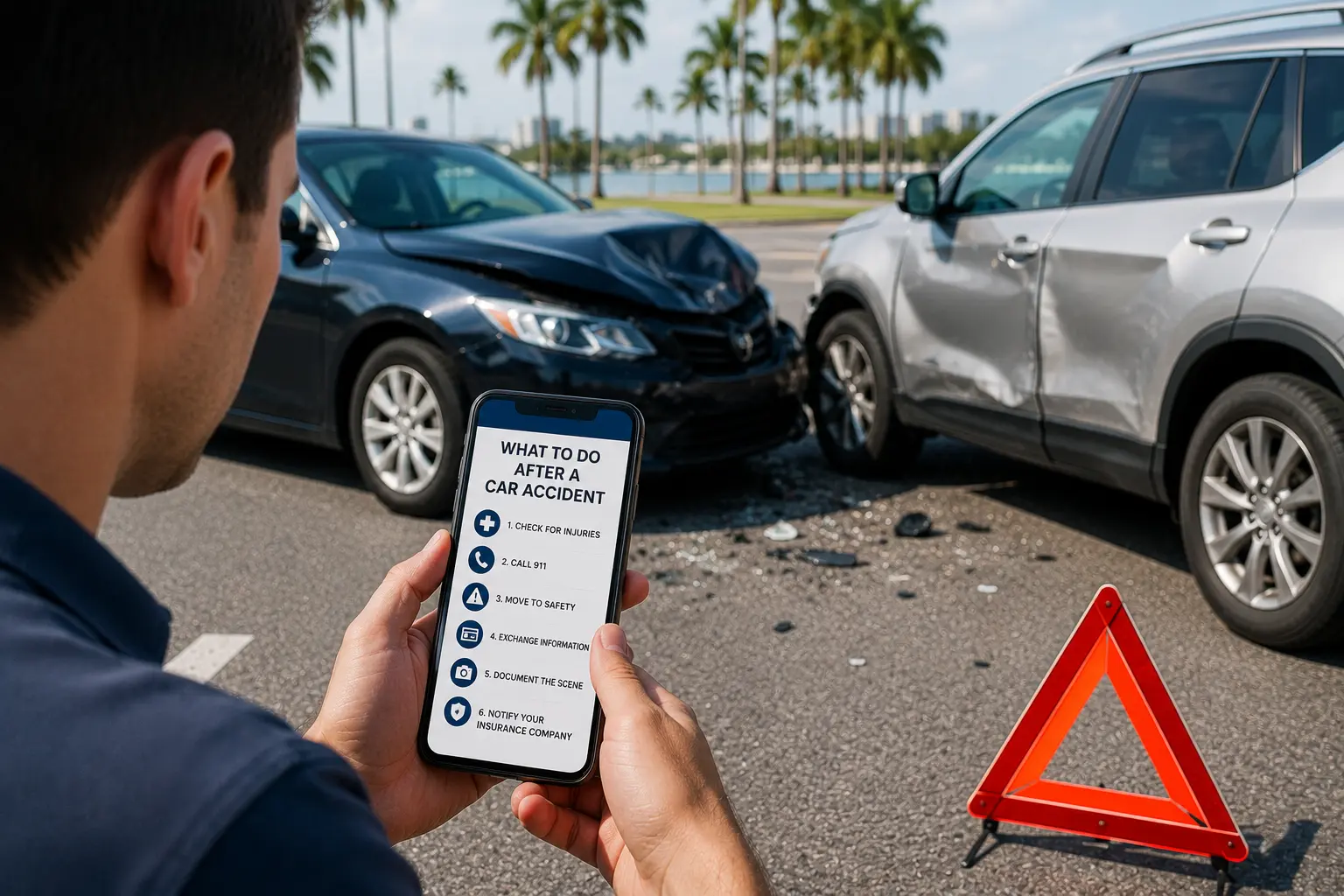
Knowing what to do after a car accident in Florida is the difference between a smooth claim and a fight you did not need to have. The steps you take in the first hours and days protect both your health and your right to be paid.
This guide walks through the scene, the medical deadline that trips up most people, and the mistakes that quietly sink claims. For how the money gets calculated later, see our guide to what your Florida claim is worth.
What To Do at the Scene
The first minutes are about safety and a record. Move to a safe spot if you can, check on everyone, and call 911. A police report creates an official account of the crash that matters a great deal later, so let officers document the scene even for what looks like a minor fender bender.
Florida law requires you to report a crash that involves injury, death, or significant property damage, so calling it in is not optional in those cases. Stay calm and factual with the officer, stick to what you know, and avoid guessing or speculating about who was at fault.
While you wait, gather what you safely can: the other driver’s name, license, insurance, and plate, plus photos of the vehicles, the positions, and the surroundings. If there are witnesses, get their names and numbers, because they are hard to find later.
Watch what you say at the scene. A reflexive I am sorry or I did not see you can be twisted into an admission of fault later, even when the other driver caused the crash. Be polite and check on people, but leave the fault analysis to the investigation. Stick to exchanging information and documenting what you see.
Do not refuse medical attention at the scene just because you feel okay. Shock and adrenaline hide injuries in the moment, and declining care can later be used to argue you were not hurt. If paramedics recommend an evaluation, take it.
If your car is drivable and safe, move it out of traffic before exchanging information, since secondary crashes at the scene are a real danger on busy Florida roads. If it is not safe to move, turn on your hazards and wait for help rather than standing in live lanes to inspect the damage.
Already in a crash and unsure what is next? Call (727) 306-3324 or request a free case evaluation.
The Florida 14-Day Rule and Why It Controls Your Benefits
Here is the rule that decides more Florida claims than any other. Under Florida Statute 627.736, you must get initial medical care within 14 days of the crash to keep your Personal Injury Protection benefits. Miss that window and you forfeit the $10,000 in PIP entirely.
This catches people because crash injuries hide. Adrenaline masks pain, and soft-tissue and head injuries often surface days later. By the time you feel the full effect, the deadline may be closing, so getting checked promptly protects you even if you feel fine.
There is a cap inside the cap. You only unlock the full $10,000 if a provider diagnoses an emergency medical condition, otherwise benefits stop at $2,500. Our Florida PIP guide explains how to protect those benefits if an insurer pushes back.
The safest move is simple: see a doctor within a day or two, not on day 13. Early treatment ties your injuries to the crash on the record, which is exactly what the insurer will later test. A long gap between the crash and your first visit is one of the most common reasons claims get reduced or denied.
PIP applies whether you were the driver, a passenger, or even a pedestrian or cyclist in many cases, and it does not depend on who caused the crash. Knowing the benefit is there, and that the clock is running, is half of protecting it.
Tell the doctor it was a car accident, and describe every symptom, not only the worst one. People mention the obvious injury and forget the headaches, the numbness, or the trouble sleeping, and anything left out of the early record is easy for the insurer to dispute later. A complete first visit sets the foundation for the whole claim.
Documenting the Crash and Your Injuries
Evidence wins claims, and most of it is gathered in the first days while everything is fresh. Photograph the damage to both vehicles, the scene, road conditions, traffic signs, and any visible injuries. More images are always better than fewer.
Keep a simple file: the crash report number, the other driver’s information, your photos, and the names of any witnesses. Start a short written timeline of what happened and how you feel each day, because that record becomes powerful when an insurer later claims you were not really hurt.
Photos age well as evidence, memories do not. Take pictures the day of the crash and again as bruising or swelling develops over the following days, because injuries often look worse a week later and that progression tells the real story. Date-stamped images are hard for an insurer to argue with, and they cost nothing to take while the evidence is right in front of you.
Keep a record of how the injury affects your daily life too, not only the clinical visits. Note the work you missed, the activities you cannot do, and the sleep you lose. Those details turn an abstract injury into a concrete loss a jury and an adjuster can understand, and they are easy to forget months later if you do not write them down now.
Save every medical record and bill, and follow your treatment plan without gaps. Missed appointments give the insurer an opening to argue you healed. For a printable list, see our after-accident checklist.
Not sure what to keep or document? Call (727) 306-3324 or request a free case evaluation.
Talking to Insurers: What Not To Say
Expect a call from the other driver’s insurer fast, often within a day. The adjuster sounds friendly, but the goal is to limit what the company pays, and an early recorded statement is one of their best tools to do it.
You are not required to give the at-fault insurer a recorded statement, and you should not before getting advice. Do not admit fault, do not guess at facts, and do not downplay your injuries with a casual I am fine, because all of it can be used to cut your claim.
Adjusters are trained to sound helpful while gathering exactly the words that limit your claim. A friendly how are you feeling today invites a hopeful I am okay that resurfaces later as evidence you were not hurt. There is no rush to give a statement, and politely declining until you have spoken with a lawyer costs you nothing.
The same caution applies to signing anything. Insurers sometimes send a broad medical-records release that hands them your entire history to dig for a pre-existing condition to blame. You control what you sign, and a lawyer makes sure any release is narrow and fair before your signature goes on it.
Report the crash to your own insurer as your policy requires, stick to the basic facts, and let your medical providers describe your injuries. When in doubt, the safest answer is that you will follow up after speaking with a lawyer.
Be especially careful with quick settlement offers in the first weeks. A fast check can feel like relief when bills are arriving, but signing a release closes the claim for good, even if your injuries turn out to be far worse than they first seemed. Once you sign, you cannot reopen it, so understand the full picture before you accept anything.
When You Can Step Outside PIP and Sue
PIP pays your first bills regardless of fault, but it does not pay for pain and suffering. To pursue those damages from the at-fault driver, your injury must clear Florida’s serious-injury threshold under Florida Statute 627.737: a permanent injury, significant and permanent scarring, or permanent loss of an important bodily function.
This is why an accurate diagnosis matters so much. A soft-tissue strain that heals may stay inside PIP, while a herniated disc with a permanent-impairment rating opens a full claim against the at-fault driver’s insurance for the rest of your losses.
Stepping outside PIP is also where the real money lives, because that claim can include the full medical bills PIP did not cover, future treatment, complete lost wages, and pain and suffering. PIP is a floor, not the ceiling, and treating it as the whole claim leaves serious money on the table when the injury qualifies.
The at-fault driver’s insurer fights the threshold hard, because keeping you under it caps their exposure. A common tactic is sending you to their own medical examiner who downplays the injury. Consistent treatment with your own doctors, and a clear record of your symptoms, is what holds up against that.
Once you step outside PIP, the value picture changes, and so does the deadline. Since House Bill 837, you have two years to file a lawsuit. Our Florida car accident lawyers page explains how those claims work.
Common Mistakes That Hurt Your Claim
Most claims lose value through avoidable errors in the first few weeks:
- Skipping or delaying medical care past the 14-day deadline
- Gaps in treatment that the insurer reads as recovery
- Giving a recorded statement before a lawyer reviews it
- Posting about the crash or your activities on social media
- Accepting the first settlement offer before the full injury picture is clear
None of these feel like mistakes at the time. They feel like moving on. But each one hands the insurance company a reason to pay less, and some are nearly impossible to undo, which is why early advice protects your claim.
Social media deserves a special warning. Insurers check claimants’ public posts, and a single photo of you smiling at a family event or lifting a grocery bag gets twisted into proof you are not really hurt. The safest approach after a crash is to stay off social media about your activities entirely until the claim is resolved, and to ask friends and family not to tag you either.
When To Call a Lawyer
Not every fender bender needs a lawyer. But if you were hurt, if fault is disputed, if the insurer is delaying or lowballing, or if the medical bills are climbing past your PIP, a free consultation is worth the call before you sign anything.
A lawyer handles the adjusters, protects the deadlines, values the claim properly, and negotiates medical liens at the end so more of the settlement reaches you. On a contingency fee, there is no upfront cost, so the downside of asking is essentially zero.
Studies of injury claims have long found that represented claimants tend to recover more on average, even after fees, largely because lawyers value claims correctly and refuse the first offer. The gap grows with the seriousness of the injury, so the more a crash actually cost you, the more a free consultation is worth.
Watch for the signs that a claim is heading sideways: the insurer disputes who was at fault, delays returning calls, asks for a recorded statement, or floats a number that does not come close to your bills. Any one of these is a good reason to get advice before you respond.
The earlier you call, the more we can do, because the evidence is fresh and the deadlines are still open. Even a short conversation can keep you from a costly mistake in those first critical days, and it costs you nothing to ask. There is no obligation, and if your situation does not need a lawyer, we will tell you that honestly.
How United Law Group Can Help
We build the medical and fault record, deal with the insurers, value the claim correctly, and fight for the full amount when the carrier will not pay it. Owner Jack Vasilaros reviews these cases personally.
We work on contingency, so there is no upfront cost and no fee unless we win. The consultation is free, and Jack’s got your back from the first call to the final check.
What is the 14-day rule in Florida?
You must get initial medical care within 14 days of a car accident to keep your $10,000 in PIP benefits under Florida Statute 627.736. Miss the deadline and you forfeit those benefits, which is why prompt treatment is critical.
Should I go to the hospital after a car accident in Florida?
Getting checked promptly is wise even if you feel fine, because crash injuries often surface days later and the 14-day PIP deadline is strict. A prompt medical visit protects your health and your claim.
Do I have to report a car accident in Florida?
Yes, Florida requires you to report crashes involving injury, death, or significant property damage. Calling 911 and getting a police report also creates an official record that helps your claim.
Should I give the other driver’s insurer a recorded statement?
No, not before getting advice. You are not required to, and adjusters use recorded statements to limit what they pay. Stick to basic facts and follow up after speaking with a lawyer.
How long do I have to file a claim after a Florida crash?
For crashes on or after March 24, 2023, you have two years to file a lawsuit under House Bill 837. Acting early protects the evidence that proves fault and value.
When should I call a lawyer?
If you were hurt, fault is disputed, or the insurer is delaying or lowballing, call for a free consultation before signing anything. On a contingency fee there is no upfront cost.
What should I avoid saying after a crash?
Do not admit fault, do not guess at facts, and do not downplay your injuries. Casual remarks like I am fine can be used later to reduce your claim.