

Call Now Contact Us

Texas Motorcycle Accidents and Comparative Fault

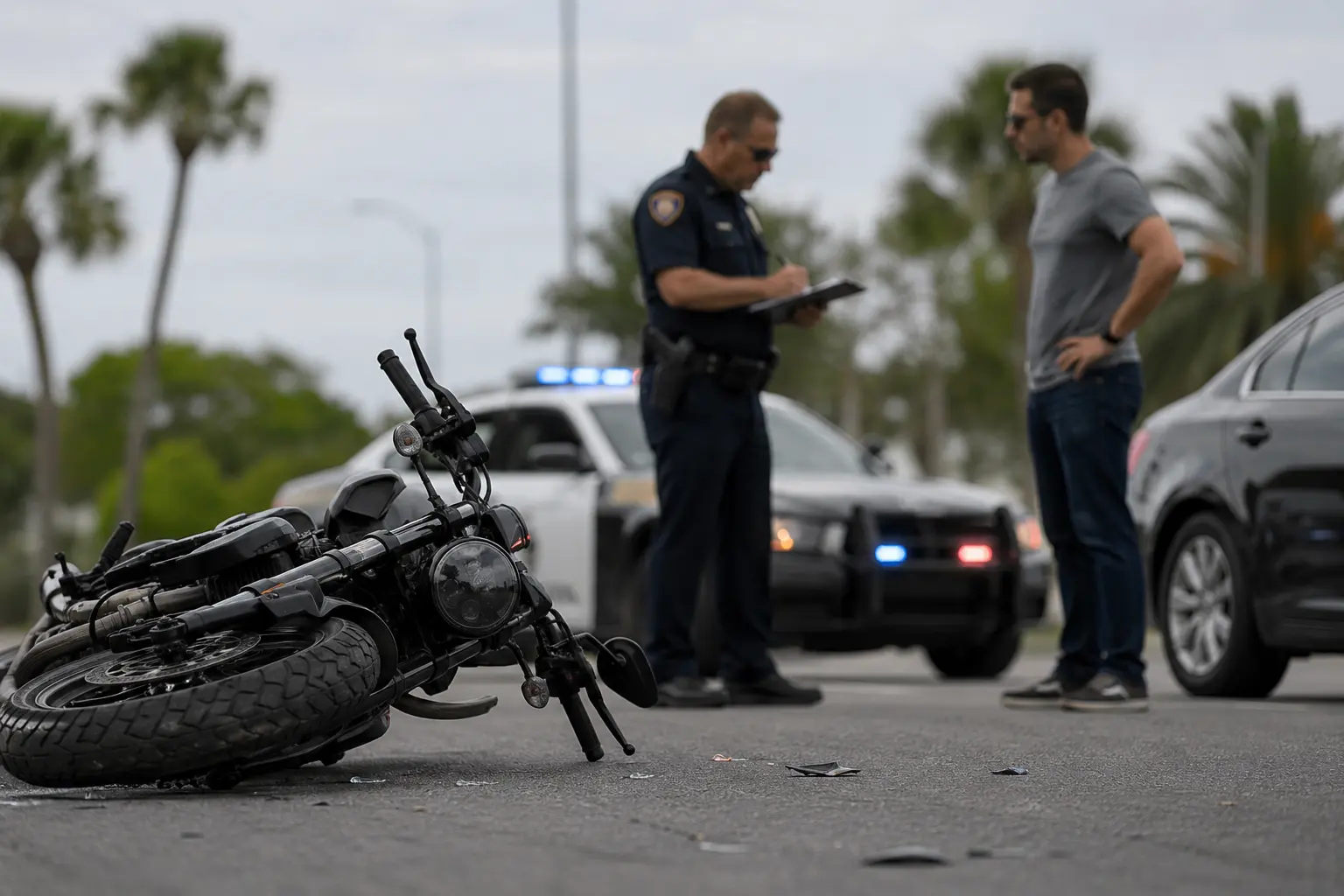
Understanding Texas motorcycle accident comparative fault is the difference between accepting a quick denial and recovering what you are owed. Insurers love to tell injured riders the crash was their fault, hoping they walk away. Often that is simply not true, and the law gives a partly-blamed rider far more room to recover than the adjuster will ever volunteer to tell you. This guide explains the 51% rule, how the helmet question fits in, and how a partially-at-fault rider still gets paid. The short version: partial fault is not the end of your claim, and your helmet choice is not a free pass for the driver who actually hit you. For the full picture, see our Houston motorcycle accident page.

United Law Group
ENQUIRE

Get a Free Case Evaluation

Tell us what happened. There is no cost and no obligation. Fill out the secure form or call us now. A member of our legal team will listen to your story and provide a free, confidential assessment of your legal options.

Jack's Got Your Back!

Full Name

Email

    Zip Code

    Phone Number

    City, State

    Case Description

    By submitting this form, you agree to our Terms & Conditions and Privacy Policy.
    United Law Group

    Texas Modified Comparative Negligence and the 51% Bar

    Texas follows a modified comparative negligence system, making fault one of the most important factors in every motorcycle accident claim. Even when another driver caused the crash, the percentage of fault assigned to each party directly affects whether you recover compensation and how much you receive.

    The 51% Bar Rule

    The 51% Bar Rule

    Under Texas Civil Practice and Remedies Code Section 33.001, riders who are 51% or more responsible for a motorcycle accident cannot recover damages. If you are 50% or less at fault, your compensation is reduced by your assigned percentage of responsibility.


    Evidence Determines Fault

    Evidence Determines Fault

    Fault is often decided by the smallest details. Vehicle damage, skid marks, traffic camera footage, witness statements, turn signal use, and the point of impact can all influence how responsibility is assigned. Preserving and presenting this evidence early is essential to protecting your claim.

    How Insurance Companies Shift Blame

    How Insurance Companies Shift Blame

    Insurance companies routinely argue that riders were speeding, difficult to see, distracted, or could have avoided the collision. Even a small increase in your assigned fault can significantly reduce your compensation or eliminate it altogether. Challenging unsupported fault allegations is one of the most important parts of building a strong motorcycle accident case.

    United Law Group

    Texas Modified Comparative Negligence and the 51% Bar

    Texas follows a modified comparative negligence system, making fault one of the most important factors in every motorcycle accident claim. Even when another driver caused the crash, the percentage of fault assigned to each party directly affects whether you recover compensation and how much you receive.

    The 51% Bar Rule

    The 51% Bar Rule

    Under Texas Civil Practice and Remedies Code Section 33.001, riders who are 51% or more responsible for a motorcycle accident cannot recover damages. If you are 50% or less at fault, your compensation is reduced by your assigned percentage of responsibility.
    Evidence Determines Fault

    Evidence Determines Fault

    Fault is often decided by the smallest details. Vehicle damage, skid marks, traffic camera footage, witness statements, turn signal use, and the point of impact can all influence how responsibility is assigned. Preserving and presenting this evidence early is essential to protecting your claim.

    How Insurance Companies Shift Blame

    How Insurance Companies Shift Blame

    Insurance companies routinely argue that riders were speeding, difficult to see, distracted, or could have avoided the collision. Even a small increase in your assigned fault can significantly reduce your compensation or eliminate it altogether. Challenging unsupported fault allegations is one of the most important parts of building a strong motorcycle accident case.

    The Helmet Rule for Riders Over 21

    Texas law allows many adults to legally ride a motorcycle without a helmet, but that decision does not automatically reduce or eliminate an injury claim. Understanding the helmet exemption and how insurers use helmet arguments helps riders protect their right to full compensation after a crash.

    Texas Helmet Law for Adult Riders

    Texas Transportation Code Section 661.003 requires riders and passengers under 21 to wear a helmet. Riders who are 21 or older may legally ride without one if they have completed an approved motorcycle safety course or carry health insurance that covers motorcycle injuries. Law enforcement cannot stop a rider solely to verify eligibility for this exemption.

    Choosing Not to Wear a Helmet Does Not Determine Fault

    Whether you wore a helmet has nothing to do with who caused the motorcycle collision. Fault is based on the actions that led to the crash, not on the rider's safety equipment. Riding without a helmet does not erase the at-fault driver's responsibility and does not prevent you from pursuing compensation.

    How Insurance Companies Use Helmet Arguments

    Insurance companies often argue that going without a helmet made a head injury more severe, attempting to reduce the value of a claim. This is a damages argument rather than a liability argument. Even when raised, it applies only to injuries that a helmet may have prevented or reduced, not to the entire claim.

    Helmet Arguments Have Strict Legal Limits

    Road rash, broken bones, spinal injuries, internal injuries, and other non-head injuries remain fully recoverable regardless of helmet use. When a rider legally qualifies for the helmet exemption, insurers cannot rely on a violation of the law to support their argument. They must prove that wearing a helmet would have reduced the specific head injury before any reduction in damages can be considered.

    Don't Let Insurance Companies Misuse the Helmet Law

    Protecting Your Texas Motorcycle Accident Claim

    Texas motorcycle accident claims often involve more than simply proving another driver caused the crash. Helmet arguments, comparative fault, available damages, and strict filing deadlines can all influence the outcome. Understanding these issues helps riders preserve evidence, protect their rights, and maximize compensation.

    When Helmet Use Affects Your Claim

    Helmet use does not automatically determine whether you can recover compensation. In general: No head injury, helmet use is usually irrelevant. Wearing a helmet eliminates the issue entirely. Riders who legally qualified for Texas's helmet exemption can still pursue compensation. Non-head injuries, including fractures, spinal injuries, and road rash, remain fully recoverable.

    Proving Fault and Recovering Compensation

    Because Texas follows the 51% comparative fault rule, evidence is the foundation of every motorcycle accident claim. Building a strong case may include: Police crash reports Scene photographs and vehicle damage Traffic camera or dashcam footage Witness statements Statements made by the at-fault driver

    The Texas Two-Year Filing Deadline

    Texas generally gives injured riders two years from the date of the crash to file a lawsuit. Waiting too long can permanently eliminate the right to recover compensation. Acting early also helps preserve surveillance footage, physical evidence, witness testimony, and other proof that may disappear within weeks, strengthening both liability and the overall value of the claim.

    The Clock Is Ticking Don't Lose Your Rights. These deadlines are strict and unforgiving. Contact us immediately to protect your right to compensation before it's too late.

    You Pay Absolutely Nothing

    Unless We Win Your Case

    Motorcycle accident claims become stronger when evidence is preserved early and insurance coverage is identified quickly. Speaking with an attorney soon after a crash helps protect your claim, preserve valuable evidence, and pursue the full compensation available under Texas law.

    A Proven Record of Success for Our Clients

    These numbers represent real lives and futures our firm has helped restore. While every case is different, our history of securing significant settlements and verdicts demonstrates our unwavering commitment to our clients.

    $2.4 Million - Truck Accident Settlement

    A commercial truck driver's negligence caused our client permanent spinal injuries. With the help of our experienced truck accident attorneys, we took the case to litigation after the insurance company offered just $350,000, and secured a $2.4 million settlement that covers our client's lifetime medical needs.

    $1.8 Million - Premises Liability Verdict

    A neglected property condition led to our client's catastrophic fall resulting in traumatic brain injury. The property owner denied responsibility, but our investigation uncovered prior complaints they ignored. A jury awarded $1.8 million in damages.

    $1.3 Million - Medical Malpractice Settlement

    A surgical error left our client with permanent complications requiring multiple corrective procedures. We worked with medical experts to prove the deviation from standard care and negotiated a seven-figure settlement.

    $950,000 - Multi-Vehicle Car Accident

    When three vehicles collided on a Florida highway, determining fault was complex. With the support of an experienced attorney for car wrecks, our accident reconstruction experts proved the defendant's reckless lane change caused the crash. We recovered $950,000 for our client's serious orthopedic injuries.

    $750,000 - Product Liability Case

    A defective piece of machinery caused severe hand injuries to our client. We held the manufacturer liable for inadequate safety warnings and design flaws, securing $750,000 to cover medical expenses and lost earning capacity.

    $625,000 - Wrongful Death Settlement

    After a family lost their loved one due to a preventable accident, we fought to hold the responsible party accountable. The $625,000 settlement provides financial security for the surviving spouse and children.

    Why Our Track Record Matters

    Every case is unique, and past results don't guarantee future outcomes. However, these cases demonstrate

    Our willingness to take cases to trial when settlement offers are unfair.

    Our ability to handle complex litigation against well-funded defendants.

    Our commitment to thorough investigation and expert testimony.

    Our track record of substantially increasing initial settlement offers.

    Looking for a personal injury attorney near you? Our team is ready to help, no matter how complex your case may seem.

    track record_Jack _500 x 280

    Could Your Case Be Worth More Than You Think?

    Many insurance companies lowball initial offers. Let us fight for what you truly deserve. Contact Us for a free case review.

    Get My Free Consultation

    Get Your Free, Confidential Case Evaluation Today

    If you've been injured due to someone else's negligence, time is critical. Florida and Texas statutes of limitations are ticking, evidence can disappear, and witnesses' memories fade. The sooner you contact an attorney for personal injury, the stronger we can build your case.

    You're Under No Obligation

    This consultation is completely free with no strings attached. Whether you hire us or not, you'll leave with valuable information about your legal rights and options

    What to Expect During Your Free Consultation

    We listen to ur story '

    We listen to your story

    Tell us what happened in your own words

    We explain ur rights

    We explain your rights

    Clear guidance on Florida or Texas law and your options

    outline

    We outline the process

    Realistic timeframes and what to expect.

    honest answers

    We give you honest answers

    What your case is worth, no inflated promises

    immediate action

    We take immediate action

    If we take your case, we start working right away

    FAQs

    Frequently Asked Questions

    Navigating a legal issue can be confusing. Here are quick answers to some of the most common questions we receive.

    80+ Calls booked

    Last Month

    Yes, as long as you are 50% or less at fault. Under Texas modified comparative fault, your award drops by your share, and only at 51% or more are you barred from recovering.

    No. Going without a helmet does not bar a claim. If you were over 21 and met the safety-course or health-insurance exemption, you broke no law, and the helmet at most affects head-injury damages.

    The insurer argues a helmet would have reduced a head injury, so the head-injury damages should drop. It does not touch other injuries, and the defense must prove a helmet would have changed your specific outcome.

    Only by your share of fault, and the helmet argument only by the portion tied to a head injury. We push back on inflated fault percentages because every point comes off your recovery.

    That is their opening position, not the final word. Evidence like the police report, footage, and vehicle damage often shows the other driver caused the crash, which protects your recovery.

    Two years from the crash under Section 16.003. Acting early also preserves the evidence that keeps your share of fault low.